
Author: Howard M. Cohen
The best business origin stories rarely start in a boardroom.
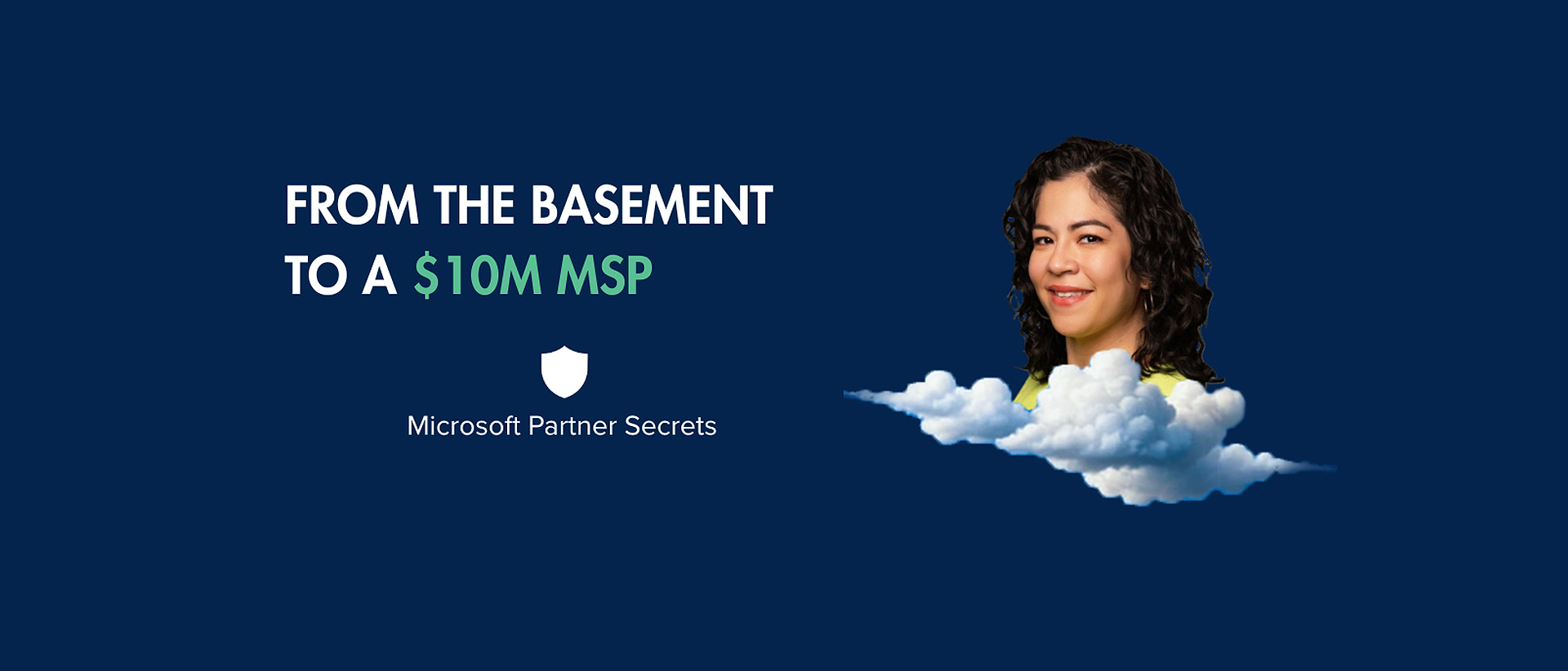
Marissa Maldonado’s starts in her brother’s basement in Atlanta, Georgia. Fifteen years later, Prota Technology is approaching 40 employees, crossing $10 million in annual revenue, and chasing what Marissa calls “the frontier” the emerging intersection of Microsoft AI, agentic tools, and business transformation. And the most remarkable thing? They did almost all of it without a marketing department.
On the Microsoft Partner Secrets podcast, Marissa pulled back the curtain on how Prota built a thriving MSP practice on a foundation of values, recurring revenue, obsessive client satisfaction, and a deepening Microsoft partnership.
Every MSP should hear this story.
Their Secret Sauce Is a Family Recipe
When Marissa joined her brother Carlos to transform his solo IT practice into a real business, she brought something no consultant could sell her: core values baked in from childhood. First-generation Americans, children of immigrants from Mexico and Puerto Rico, the Maldonados grew up understanding that there are no shortcuts. Hard work, loyalty, and protecting the people you love, that’s the DNA of Prota Technology.
“Anytime someone tries to sell me a shortcut,” Marissa says, “I’m not interested.”
That philosophy shaped everything. Rather than scaling recklessly, she scaled methodically, putting on each hat first, then systematically handing each one to someone smarter than her.
Today she is surrounded by a roomful of experts who are better at their respective jobs than she ever was, which frees her to focus on vision and strategy. That’s not a failure of ambition. That’s what smart scaling actually looks like; working on your business as much or more as you work in your business.
The Service Desk Isn’t a Cost Center.
It’s an Intelligence Engine
Prota began, like most MSPs of that era, in the break-fix model. But Marissa and Carlos saw something others missed.The service desk wasn’t just a support function. It was a data source. Every ticket revealed patterns. Every pattern revealed deficiencies. Every deficiency revealed an opportunity to automate, optimize, or consult.
That insight drove Prota’s transition beyond break-fix to all-inclusive contracts anchored by service desk support and that created a predictable recurring revenue stream they could reinvest in the business quarter after quarter.
Marissa is careful to issue a warning here that every MSP needs to hear: recurring revenue is not a gift. It’s a promise.
“You have to justify the value of that revenue every single month,” she says, “or else your reputation falls apart.”
Too many MSPs chase the recurring revenue model for the cash flow predictability while losing sight of the relentless value delivery that makes it sustainable. Prota never confuses the two. The professional services side of the business exists precisely because recurring revenue demands it — if you don’t deliver advanced services, someone else will. And then that someone else will take your recurring revenue too.
Verticals Aren’t Chosen. They Choose You
Prota didn’t sit down one day and pick healthcare, financial services, nonprofits, and manufacturing as their target verticals.
Those industries found them!
Prota consistently demonstrated they could thrive in complex, highly regulated environments. Clients with strict compliance requirements such as HIPAA, financial oversight, and board governance kept showing up at their door, because Prota spoke their language.
That organic specialization became a strategic moat. Deep expertise in compliance-driven industries is not easy to replicate, and it makes every conversation with a prospective client more credible and more efficient. You are no longer explaining what you do. You’re already speaking the language of their specific problems in their specific business.
Satisfaction Is More Than Metrics. It’s a Mindset.
Here is where Marissa separates herself from the average MSP operator. Most track customer satisfaction. Marissa treats any dip in satisfaction as a company-wide emergency.
“The second I see it starting to slipI call everyone to a complete stop! What is happening?”
Prota runs immediate post-ticket feedback surveys through their integrated ticketing system. Their technical account management team conducts monthly NPS interviews with every client. When something goes wrong, they have a formal process, Marissa calls it “fumbling the ball,” that requires the team to pause, investigate, get curious, and fix the underlying process. The goal isn’t to recover from the incident. The goal is to come out better than you were before it happened. Turn the negative into a super-positive.
Perhaps the most important thing Marissa said during the entire podcast may be this: clients and employees are “unpredictable operating systems.” You cannot set satisfaction on cruise control. The moment you believe everything is perfect is the moment it starts falling apart. Customer satisfaction is not a project with a completion date. It’s a permanent operating discipline.
And she extends that exact same discipline to her employees. Monthly anonymous NPS surveys. Quarterly check-ins. One-on-one time. And a quarterly gathering called Prota Spark, where frontline team members bring ideas and those ideas actually get built into the operation. Marissa has made peace with the fact that the best innovation in her company no longer comes from her. It comes from the people doing the work. Creating the culture that enables this is now her most important job.
The Microsoft Partnership:
From the Accidental to the Intentional
For years, Prota did Microsoft right without realizing they were doing it wrong. They were building expertise, serving clients, and growing revenue.
What they weren’t doing was engaging with Microsoft as a strategic partner. When Marissa’s COO joined the team, he asked a simple question, “Why aren’t you taking advantage of Microsoft?”
That question opened a door that changed everything.
Prota began aligning properly with the CSP program, pursuing designations, and eventually entering direct conversations with Microsoft about becoming a frontier partner. Marissa has attended conferences, experienced Microsoft’s evolution firsthand, and emerged with the same level of excitement she felt fifteen years ago when SharePoint Online finally clicked into place, and she realized Microsoft had actually been listening to SMBs.
She sees that same inflection point happening right now with Copilot, AI integration, and the Microsoft 365 ecosystem. The hub-and-spoke model of the future, she argues, isn’t hardware, it’s intelligence. Microsoft is the hub. Every business application clients need to operate is a spoke. Partners who understand how to make that hub work for their clients’ specific regulatory and operational realities are positioned for enormous growth.
Customer Zero:
The Most Powerful Sales Strategy You’re Not Using
Prota’s sales methodology, if you can call it that, has always been education. Not pitching. Not closing. Educating. Marissa walks into a room of entrepreneurs and talks to them about the operational maturity of their business, not their tech stack. That approach builds authentic peer-to-peer trust in a way no sales script ever could.
They did this for fifteen years without a formal framework. Now, with a team approaching 40 professionals, they’re formalizing the approach through what Microsoft calls Customer Zero, becoming the first, most advanced user of the Microsoft solutions you recommend to clients. Prota is walking the path on Copilot integrations, voice tools, governance, and certifications so that every team member can speak from experience, not theory.
The math is simple and powerful: if all 40 of your employees are genuinely excited about a technology because they use it every day, you have 40 salespeople who never have to sell. People automatically sell what they know and love most.
The Advice Every Microsoft Partner
Needs to Hear& Heed
Marissa offers three pieces of counsel for MSPs serious about their Microsoft partnership:
Stop leaving money on the table. Microsoft’s profitability programs and incentives exist for partners. Engage with them fully, early, and deliberately. Marissa spent years not doing this and regrets it.
Become the educational voice in your verticals. Your clients almost certainly already own Microsoft 365. Your job is to help them maximize what they’ve already paid for. That reframe, you already have it, is both honest and disarming. It builds trust faster than any sales technique.
Stay nimble and stay connected. Microsoft changes constantly. Acronyms shift. Programs evolve. The only way to keep pace is to stay embedded in the Microsoft partner community. Marissa credits her re-engagement with that community as the source of “wildfire growth” in both strategic clarity and business momentum.
And underneath all of it, the philosophy that holds everything together: give and give, not give and get. Focus on creating genuine value for your clients and your employees, and the returns will follow. Prota’s success over fifteen years is proof that this is not idealism. It’s strategy.
Marissa Maldonado and Prota Technology are, by her own gleeful admission, just getting started. Fifteen years in and she sounds like someone who just figured out the game. That’s what happens when you build on the right foundation. The upside keeps expanding.
The question for every MSP reading this: what are you building on?
To learn more, contact us here.