
Author: Howard M. Cohen
Your Identity Layer Is Only as Strong as the Configuration Behind It
When a content distribution network (CDN) misconfiguration, a storage policy error, and a model update glitch each cascaded into identity failures, the message was clear.Reactive cloud management is no longer an option.
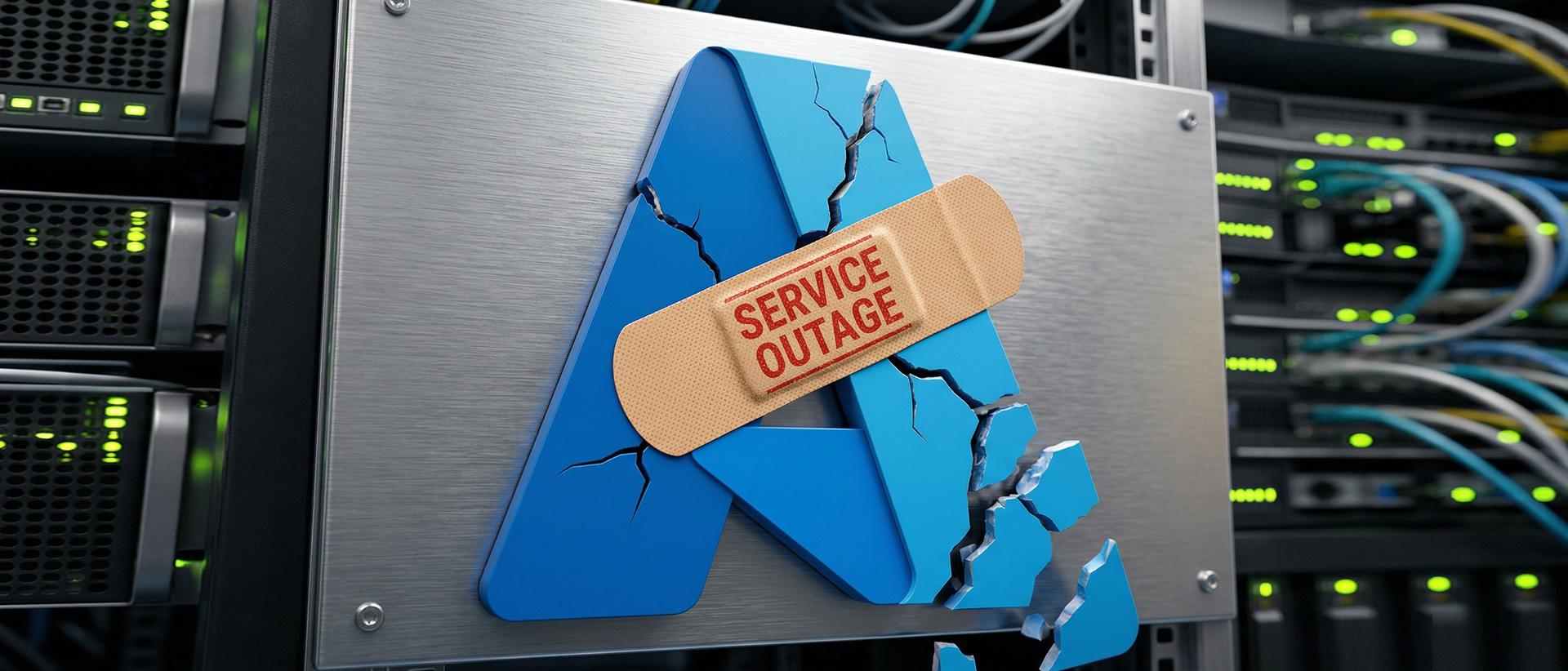
Between October 2025 and March 2026, Microsoft Azure experienced three significant outages, each triggered by a different root cause but all resulting in the same outcome: identity services failed, authentication broken, and businesses who lost access to their own environments. For organizations running mission-critical workloads in Azure, these incidents exposed an uncomfortable truth: a single configuration error anywhere in the stack can take down the identity layer that everything else depends on. And misconfiguration causes between 30% to 70% of outages.
Here is what happened, what it means, and what your organization needs to be doing about it right now.
What Happened
The CDN Configuration Error occurred in October 2025. An inadvertent configuration change in Azure Front Door, Microsoft’s global CDN and traffic routing layer, triggered cascading failures across more than a dozen Azure services, including Azure SQL, Virtual Desktop, Microsoft 365 apps, and multiple cybersecurity products. Recovery required rolling back to a “last known good” configuration and carefully reloading nodes to prevent overload. When the CDN layer routing authentication traffic fails globally, every identity-protected service goes dark, regardless of whether those services are each individually healthy.
The Storage Misconfiguration occurred in February 2026. A remediation workflow intended to disable anonymous storage access misfired, applying the policy to Microsoft-managed accounts that were intentionally configured for public read access, including VM extension package storage. The primary outage lasted 6.5 hours, disrupting VM deployments, AKS, Azure DevOps, and GitHub Actions. But the real damage came next: a surge of retry traffic overwhelmed Managed Identities in East US and West US, triggering a six-hour secondary outage. Customers could not create or delete resources, acquire tokens, or authenticate across Synapse, Databricks, Copilot Studio, Container Apps, and more. Microsoft had to remove all traffic from the identity service to repair it without load.
The Performance Update Glitch happened in March 2026. A GPT-5.2 model update for Azure OpenAI introduced incompatible configuration settings that production code did not support. The 20-hour outage was compounded when an unrelated telemetry failure produced incomplete capacity data, routing traffic disproportionately to a few regions and sustaining failures even as the primary fix progressed. Identity and routing systems that depend on real-time telemetry inherit the fragility of that telemetry.
The Pattern
These incidents share a structure every Azure customer should recognize:
- A configuration change introduces an error, whether a CDN policy, storage access rule, or model deployment setting.
- The error propagates faster than detection, safe deployment practices failed to catch the defect before production scale in all three cases.
- Identity services become collateral damage, the authentication layer was either directly impacted or overwhelmed by the recovery process itself.
- Recovery creates secondary failures, retry storms, and incomplete telemetry turned mitigation into new outages.
Identity Management Lessons
Treat identity as a critical dependency especially in the time of ZTNA. Managed Identities, Entra ID tokens, and service principals are the load-bearing walls of Azure architecture. Monitoring, incident response, and disaster recovery plans must treat identity with the same priority as compute and storage.
Configuration management is security management. Two of three outages were caused by configuration changes that bypassed adequate validation. Configuration drift and unvalidated policy changes are identity security events, not just operational inconveniences.
Plan for cascading failures. The February outage proved that recovery can be more damaging than the initial incident. Incident response must account for retry storms and the reality that every recovering service simultaneously demands authentication.
Proactive monitoring beats reactive firefighting. In each incident, detection lagged behind propagation. Continuous monitoring covering infrastructure, applications, and the identity layer is not optional.
You need operational depth you probably lack in-house. These outages were not caused by exotic attacks or unprecedented scenarios. They were caused by routine operations such as policy changes, performance updates, and configuration adjustmentsall interacting with complex dependencies in unexpected ways.
Managing this level of complexity requires deep Azure expertise, 24/7 operational coverage, and the kind of proactive configuration management that most internal IT teams are not staffed or tooled to provide.
What Idenxt Does Differently
At Idenxt, these outages validate the approach we built our services around: proactive, 24/7 operational management that treats configuration integrity and identity resilience as first-order concerns.
Zero-Touch Azure Operations delivers complete management of your Azure environment.Infrastructure, applications, identity, and security with no need for in-house Azure operations staff. This includes 24/7 proactive monitoring, configuration management aligned to Microsoft best practices, incident management with post-incident reporting, and AI-driven security operations.
Mission-Critical Application Protection provides a dedicated Single Point of Contact (SPOC) available 24/7/365, proactive anomaly detection before cascading failures develop, and backup and disaster recovery management that protects your data even when Azure’s own identity services are compromised.
AI Protection Service addresses the new configuration risks that AI workloads introduce including performance monitoring, scalability management for traffic surges, and data governance across AI processes.
Every Idenxt service is backed by our SleepWell SLA®, the world’s first SLA that guarantees not just uptime and performance, but your peace of mind. When Azure experiences cascading identity failures at 2 AM, you should not be managing the response. That is our job. And every service is built exclusively on Microsoft technology with zero third-party components, and no additional attack surface.
Stop Reacting. Start Protecting.
You can continue to manage your Azure environment reactively, hoping your team can handle the next cascading identity failure at 3 AM. Or you can put a proven, 24/7 operations team between your business and the next outage.
- Request a free analysis and business case. Let us assess your Azure environment and show you exactly where your configuration and identity risks are, along with a clear cost comparison. To place your request simply contact us at https://www.idenxt.com.
- Talk to our team. Reach out to Per Werngren at per.werngren@idenxt.com to discuss how Idenxt can protect your Azure workloads today.
- Explore the Azure Marketplace! Idenxt Mission-Critical Application Protection is available as a transactional offer. See https://marketplace.microsoft.com/en-us/product/saas/idenxtcorporation1721747602923.idenxt001, simplifying procurement through your existing Azure relationship.
Your identity layer is only as strong as the operational discipline behind it. Make sure that discipline never sleeps.
To learn more, contact us here.